Registration is open Reserve your spot — workshops & keynotes day ↗

About

Ligatures Summer School 2026

July 15–17, 2026
Faculty of Fine Arts, University of Porto (FBAUP) — Porto, Portugal
https://ligatures.fba.up.pt/sig/

The Ligatures Special Interest Group invites you to Porto for the third edition of the Ligatures Summer School. Join us from July 15–17, 2026, for three days on the materialities of language — where graphic heritage, visual communication and emerging technologies reshape written and typographic artifacts.

Intensive hands-on workshops
Exploring topics that range from creative computation and post-digital letterpress to contemporary typographic design.
Post-graduate communications
A dedicated academic track for emerging research and speculative design.
International keynotes
Insights from leading figures in reading research, legibility, and computational editorial design.

The theme

Transitions

Transitions explores the cultural and technological realignments defining our era. As we navigate the accelerating shift from human-centric craftsmanship to AI-driven computational systems, the very mechanics of communication are transforming. Yet this threshold is not an erasure — it is a vital space for the reconstruction and reinterpretation of our cultural legacies.

Tracing the continuous journey of reading and writing from their tangible, material roots to their complex, intellectual futures, Transitions reflects on how we preserve, adapt, and reinvent our visual heritage. It is a platform to interrogate the shifting power dynamics of contemporary culture and to actively design the structural and typographic literacies of tomorrow.

Program

Program

The provisional program includes two days — Wednesday 15 and Thursday 16 — dedicated to hands-on workshops. The third day — Friday 17 — will be dedicated to communications and discussions. And, most importantly, to our keynote presenters Ann Bessemans and Pedro Neves.

Day one, 15 July

Day two, 16 July

Day three, 17 July

Keynote speakers

Keynote Speakers

Pedro Neves
Pedro Neves
Date and time
Friday 17 July 2026, 12:00–13:00 WET
Location
PS01 Auditorium, FBAUP
Moderator
Pedro Amado (FBAUP / i2ADS)

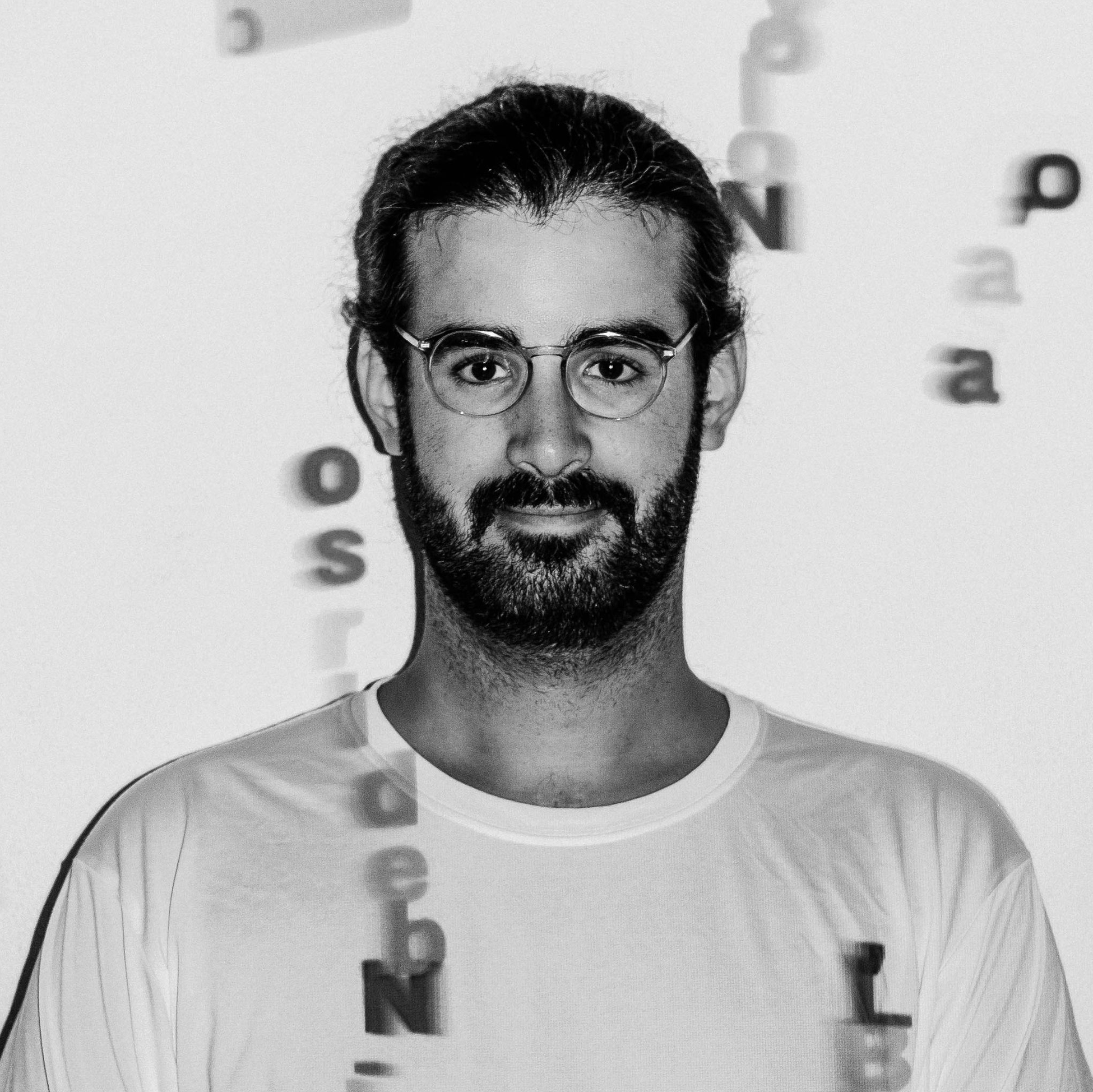
Pedro Neves is a designer and educator specializing in the use of algorithms and code to generate printed matter, digital interactive visualizations, and other web-related experiences.

Currently serving as director of undergraduate studies for the BS in Computer Science & Design offered by the University of Illinois Chicago College of Engineering in collaboration with the School of Design, Neves' scholarly research and professional practice interrogate and explore the relationships between traditional and contemporary design processes in both analogue and digital formats.

Keynote: Between Ink and Code: Notes from a Typographic Practice.

This keynote examines a design practice situated at the intersection of historical printing technologies and contemporary computational systems. Through a selection of research-led projects spanning letterpress printing, creative coding and other generative processes, it investigates how transitions between analogue and digital practices produce new forms of typographic knowledge and experimentation.

Rather than framing technological change as a replacement of one medium by another, the talk approaches transitions as productive spaces of exchange. By examining the relationships between type, tools, algorithms, and making processes, it explores how typography evolves when established techniques are reinterpreted through emerging technologies.
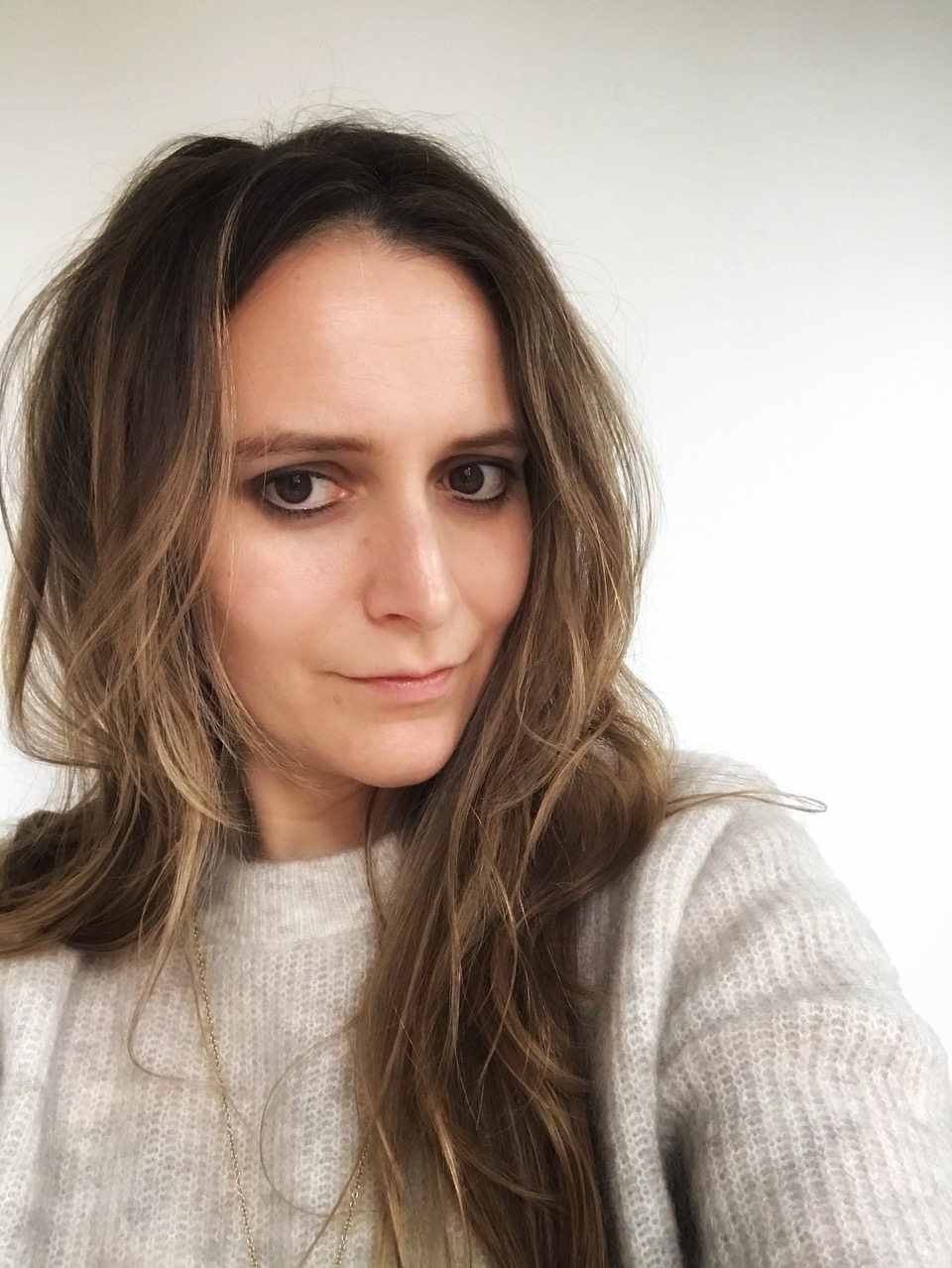
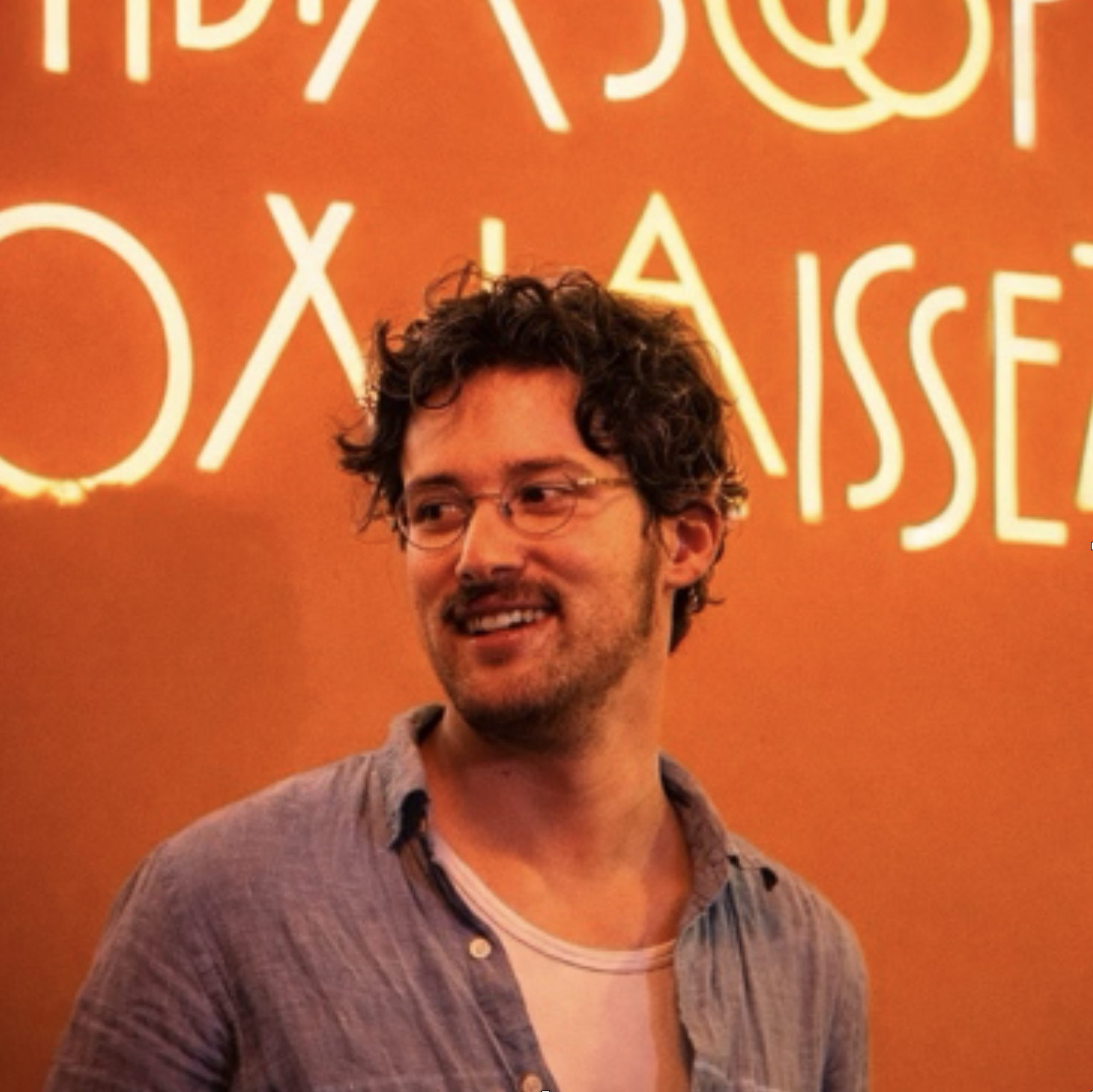
Ann Bessemans

Ann Bessemans
Date and time
Friday 17 July 2026, 17:00–18:00 WET
Location
PS01 Auditorium, FBAUP
Moderator
Ana Catarina Silva (IPCA-ESD / ID+)

Ann Bessemans (prof. dr.) is a leading expert in legibility and an award-winning typographic designer. She is the founder of READSEARCH, a research lab dedicated to practical legibility, currently based at the PXL-MAD School of Arts and Hasselt University in Belgium. Beyond her academic tenure, she operates as a designer and consultant. Starting this September, she will also teach typography and type design at the LUCA School of Arts in Ghent, where she will also expand her legibility research.

Ann holds a PhD from Leiden and Hasselt Universities, completed under the supervision of Gerard Unger. Her data-driven research, supported by multiple Microsoft grants, focuses on improving type design and/or typographies for diverse reading needs and modes, including those for readers with impairments. She actively engages in various academic and research roles, actively participating as a board of director at ATypI.

Keynote: Typography as cognitive infrastructure. A reader-centred taxonomy.

Typography actively shapes how readers navigate and comprehend text, yet design conventions inherited from print no longer match a reading landscape spanning screens, scrollable feeds, and augmented and virtual reality. Drawing on foundational frameworks from Willberg, Twyman, Waller, and Hochuli and Kinross, alongside current research on print-versus-digital comprehension, this talk proposes a medium-agnostic taxonomy mapping reading strategies onto typographic structure. Rather than offering fixed rules, it argues legibility is inseparable from design intent, giving designers a practical, evidence-informed vocabulary for matching macro- and micro-typographic decisions to how a text is actually meant to be read.

Workshops

Workshops

Ligatures 2026: Workshop A

Modular Variable Fonts with Giulio Galli & Stefano Baldassari

Date and time
Wednesday 15 July 2026, 11:00–13:00 WET (Part 1)
Wednesday 15 July 2026, 14:30–16:30 WET (Part 2)
Location
PS13A Room, South Building, FBAUP

About this event

The workshop involves the creation of modular variable fonts, with the aim of exploring non-traditional variation axes. An example of a typeface created using this method is Scatterplot (Cast Foundry), where the module is a simple circle and the variation axis is a "random" axis; that is, the modules form legible glyphs at one end of the axis and are arranged randomly (scattered) at the opposite end. Students will design a typeface with a similar structure, and will have the freedom to define the module (or modules), the shape of the letters and the behaviour of the modules along the variation axis. Students will be introduced to digital typeface design using the Glyphs software and will learn to animate the typefaces they have created using basic programming principles. Through a simple and enjoyable exercise, they will learn many fundamental concepts of typography and animation.

Requirements

Participants must have access to a personal computer with the GlyphsApp installed, or with installation permissions allowed to install GlyphsApp.

The software Glyphs runs only on Apple OS; therefore, a MacBook is the preferred option. We will seek to provide any available Mac computer in school, but as additional activities are running, we cannot guarantee more than one extra computer/participant for now. People who do not have access to an Apple machine, we will use Fontra, an alternative browser-based software.

Code of Conduct

The workshop will be held in person, and in English language. Participants are required to follow inclusive and constructive ethics and code of conduct, namely to follow the University's Standards (for academic members and staff), and/or the Berlin Code of Conduct (for external participants and the general public).

Fee / Registration Cost

The workshop has no cost. Lunch is not included.

Due to logistics, the workshop registration is limited to a maximum of 20 external participants. Registration will be managed exclusively through THE ONLINE REGISTRATION PLATFORM. If more participants than available slots are interested, a waiting list will be set up. We ask participants who are unable to attend to cancel their registration via (enable JavaScript to reveal email) so that the system can allow those on the waiting list to register and attend.

Instructors

Giulio Galli

Giulio Galli

Giulio Galli (Pesaro, Italy, 1996) is a typeface designer, researcher and teacher who lives and works in Brussels, Belgium. He holds a Master of Arts in Typographic Design from the University of Reading, UK, and is currently pursuing a PhD at the University of Hasselt, where he studies parametric typeface design for legibility purposes and human vs. computational interpretation of typographic forms. He is a member of READSEARCH Research Lab, a research laboratory focussed on legibility and empirical validation of typographic artefacts. Since 2018, he is Associate Typeface Designer at CAST Foundry (Cooperativa Anonima Servizi Tipografici), where he creates retail and custom fonts and conducts independent research. Since 2021, he has been teaching typeface design and typography at PXL-MAD School of Arts in Hasselt (Belgium) at Master's and Bachelor's level. He has written and peer-reviewed for international journals including the Journal of the Printing Historical Society, and presented his research at various conferences and institutions, such as TypeLab (part of Typographics Conference, New York), Triennale Milano, ANRT Atelier national de recherche typographique, ESAD Nancy and ECAL École cantonale d'art de Lausanne.

Stefano Baldassari

Stefano Baldassari

Stefano Baldassari (San Benedetto del Tronto, Italy, 1991) is a type designer, art director, educator, and researcher. He holds an MA in Typeface Design from the University of Reading (UK) and lives and works between Rome, Catania, and Ancona.

Since 2021, his practice has focused on type design and typographic research. Since 2023, he has been an Associate Typeface Designer at CAST Foundry (Cooperativa Anonima Servizi Tipografici), where he designs retail and custom typefaces and oversees typeface quality assurance. He has collaborated with international agencies, design studios, type foundries, and public and private institutions designing visual identities, editorial projects, communication campaigns, and custom typefaces.

He has led workshops at RUFA – Rome University of Fine Arts, NABA Nuova Accademia di Belle Arti Roma and was selected for the TYPA Residency 2025 at the TYPA Centre for Paper and Print in Tartu, Estonia. Since 2024, he has been teaching Lettering at the Academy of Fine Arts of Catania.

Ligatures 2026: Workshop B

Reading by design with Ann Bessemans

Date and time
Thursday 16 July 2026, 09:00–13:00 WET
Location
PS13A Room, South Building, FBAUP

About this event

This 4-hour "Reading by design" workshop guides attendees through a hands-on typographic restructuring exercise using a single shared text. Grounded in established typographic frameworks, participants analyze the text's structure before individually redesigning it to fit a specific reading mode — either approached digitally, printed, or hybrid. Operating under strict constraints, participants use hierarchy and access structure to shape an innovative user interaction through activating specific reading mode(s). The session ends by discussion, testing design efficacy by challenging peers to guess each piece's intended reading mode.

Requirements

Code of Conduct

The workshop will be held in person, and in English language. Participants are required to follow inclusive and constructive ethics and code of conduct, namely to follow the University's Standards (for academic members and staff), and/or the Berlin Code of Conduct (for external participants and the general public).

Fee / Registration Cost

The workshop has no cost. Lunch is not included.

Due to logistics, the workshop registration is limited to a maximum of 20 external participants. Registration will be managed exclusively through THE ONLINE REGISTRATION PLATFORM. If more participants than available slots are interested, a waiting list will be set up. We ask participants who are unable to attend to cancel their registration via (enable JavaScript to reveal email) so that the system can allow those on the waiting list to register and attend.

Instructor

Ann Bessemans (prof. dr.) is a leading expert in legibility and an award-winning typographic designer. She is the founder of READSEARCH, a research lab dedicated to practical legibility, currently based at the PXL-MAD School of Arts and Hasselt University in Belgium. Beyond her academic tenure, she operates as a designer and consultant. Starting this September, she will also teach typography and type design at the LUCA School of Arts in Ghent, where she will also expand her legibility research.

Ann holds a PhD from Leiden and Hasselt Universities, completed under the supervision of Gerard Unger. Her data-driven research, supported by multiple Microsoft grants, focuses on improving type design and/or typographies for diverse reading needs and modes, including those for readers with impairments. She actively engages in various academic and research roles, actively participating as a board of director at ATypI.

Ligatures 2026: Workshop C

InDesign Scripting: When Code and Typography Meet — with Pedro Neves

Date and time
Thursday 16 July 2026, 14:30–17:30 WET (3 hours, incl. 2 × 15 min breaks)
Location
PS13A Room, South Building, FBAUP

About this event

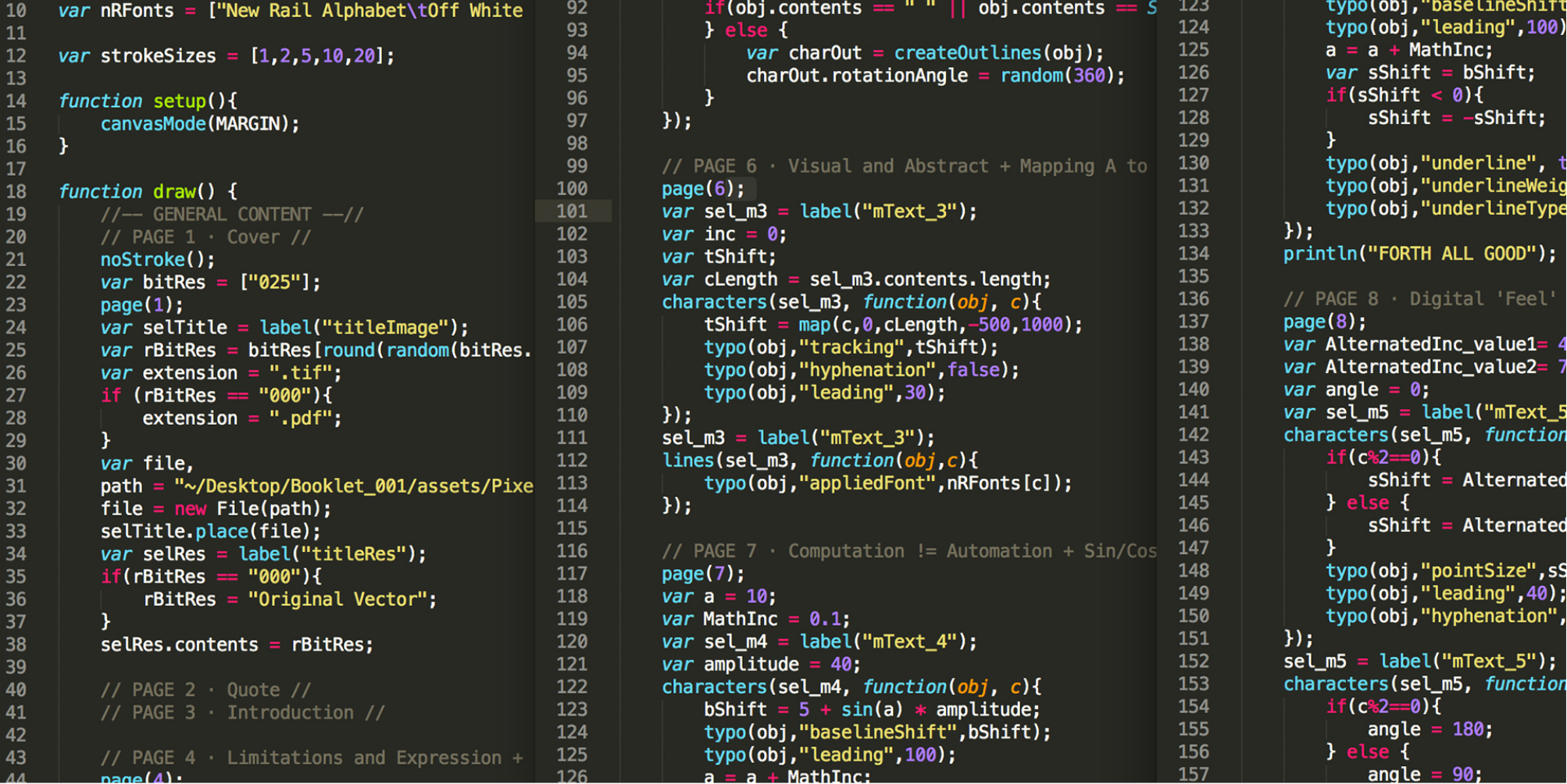
This hands-on workshop introduces basil.js, a JavaScript-based scripting environment for Adobe InDesign, as a tool for exploring computational approaches to typography and editorial design. Participants will learn how code can extend InDesign beyond its conventional interface, enabling the generation, transformation, and organization of text and visual content through code.

Working through a series of practical exercises, we will experiment with automated layouts, typographic manipulation, data-driven publishing, and generative design strategies. No prior programming experience is required, but welcomed; the workshop is for designers, researchers, and students interested in expanding their practice through creative coding.

Positioned between established editorial workflows and emerging computational methods, the workshop explores scripting not simply as a means of automation, but as a design process in itself — one capable of producing new forms of typographic expression and experimentation.

Requirements

Participants must have access to a personal computer with Adobe InDesign (version 2024 or above) and a text/code editor (we recommend Sublime Text).

Code of Conduct

The workshop will be held in person and in the English language, but is suitable for Portuguese-speaking attendees. Participants are required to follow inclusive and constructive ethics and code of conduct, namely to follow the University's Standards (for academic members and staff), and/or the Berlin Code of Conduct (for external participants and the general public).

Fee / Registration Cost

The workshop has no cost. Lunch is not included.

Due to logistics, the workshop registration is limited to a maximum of 20 external participants. Registration will be managed exclusively through THE ONLINE REGISTRATION PLATFORM. If more participants than available slots are interested, a waiting list will be set up. We ask participants who are unable to attend to cancel their registration via (enable JavaScript to reveal email) so that the system can allow those on the waiting list to register and attend.

Instructor

Pedro Neves

Pedro Neves

Pedro Neves is a designer and educator specializing in the use of algorithms and code to generate printed matter, digital interactive visualizations, and other web-related experiences.

Currently serving as director of undergraduate studies for the BS in Computer Science & Design offered by the University of Illinois Chicago College of Engineering in collaboration with the School of Design, Neves' scholarly research and professional practice interrogate and explore the relationships between traditional and contemporary design processes in both analogue and digital formats.

Communications

Research Communication & Discussions

Day Three (Friday 17 July) is the Ligatures Summer School's dedicated academic track: three moderated communications sessions presenting the accepted Extended Abstracts, interleaved with the keynote talks by Pedro Neves and Ann Bessemans and a lunch break.

Ligatures 2026: Day Three

Communications Session A

Date and time
Friday 17 July 2026, 09:00–10:00 WET
Location
PS13A Room, South Building, FBAUP
Moderator
Fabrício Fava (FBAUP / i2ADS)
  1. Abraço

  2. Viariavel

  3. Neilton — experiments from a typeface

  4. Upper Case — Transitioning Typographic Theory into Dynamic Game Mechanics

10:00–10:30 — Coffee Break & Discussion(s).

Ligatures 2026: Day Three

Communications Session B

Date and time
Friday 17 July 2026, 10:30–11:30 WET
Location
PS13A Room, South Building, FBAUP
Moderator
Fabrício Fava (FBAUP / i2ADS)
  1. The Revival of Tia Lira

  2. Yves Typeface — A Type revival from a anonymous portuguese printing tradition

  3. Reconstructing Typographic Heritage Jeanne — Bridging Seventeenth- and Eighteenth-Century Typography Through Variable Font Design

  4. Gesto–Escrita — Rediscovering handwriting as a practice of language in (de)construction

11:30–15:00 — Coffee Break, the Pedro Neves keynote (12:00–13:00, PS01 Auditorium) & Lunch Break.

Ligatures 2026: Day Three

Communications Session C

Date and time
Friday 17 July 2026, 15:00–16:30 WET
Location
PS13A Room, South Building, FBAUP
Moderator
Fabrício Fava (FBAUP / i2ADS)
  1. TypeCase — Platform for Documentation, Composition and Pedagogical Integration of the Letterpress Workshop

  2. Digital Reading in Immersive Environments — Implications for Typography and Information Design

  3. A new methodology to measure non-conventionality in typefaces

16:30–17:00 — Coffee Break, followed by the Ann Bessemans keynote (17:00–18:00, PS01 Auditorium) and the Closing Cocktail (18:00–19:00, FBAUP Garden).

Ligatures 2026: Day Three

Closing Cocktail & Casual Type Chat

Date and time
Friday 17 July 2026, 18:00–19:00 WET
Location
FBAUP Garden
Host
Rúben Dias — 0.itemzero (@itemzero)

About this event

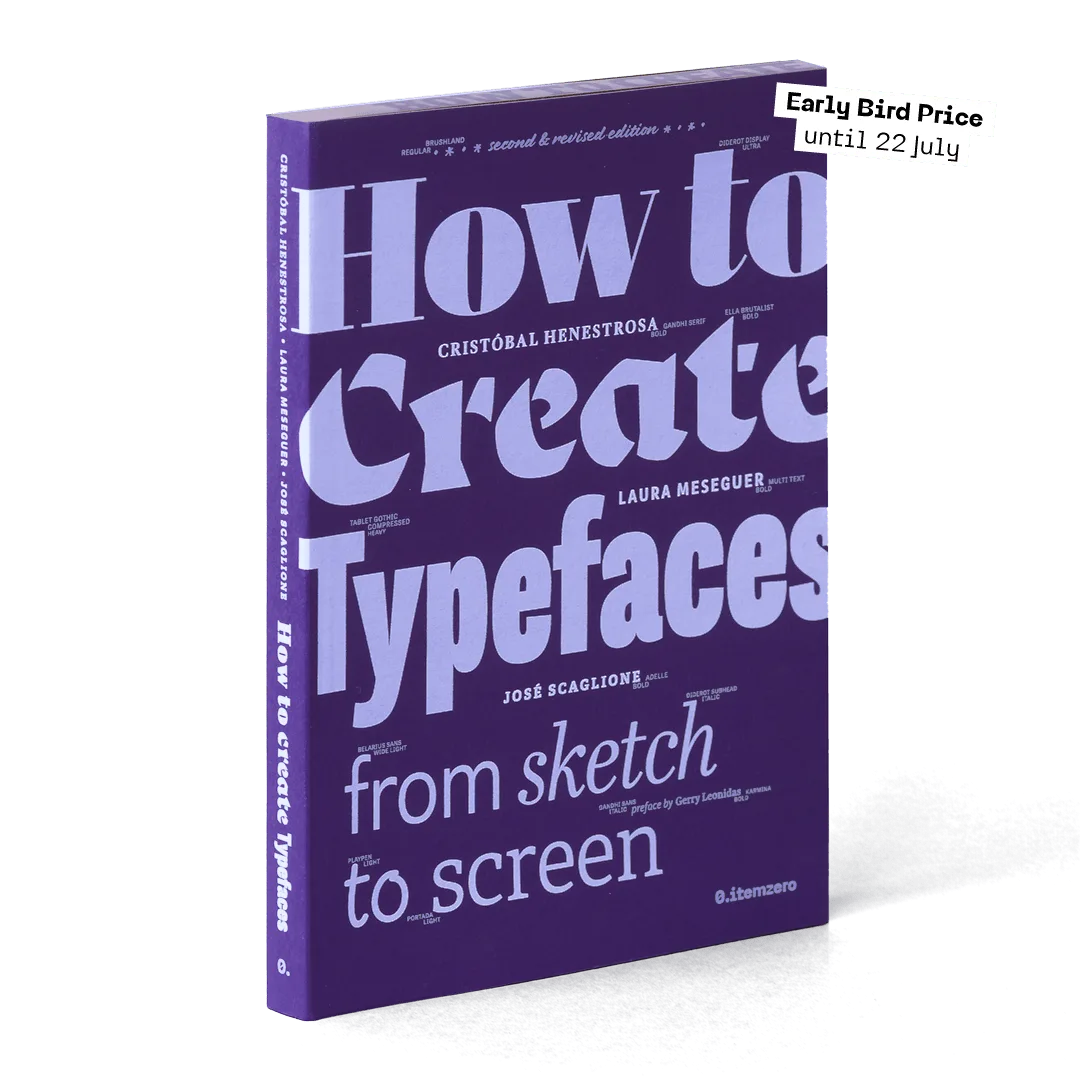
Join us in the FBAUP garden for a free drink and a relaxed close to the Ligatures Summer School 2026. 0.itemzero (@itemzero) are hosting an informal, open-air conversation with type designer Laura Meseguer about the newly revamped and expanded edition of How to Create Typefaces, the book she co-authored with Cristóbal Henestrosa and José Scaglione.

Book cover: How to Create Typefaces, by Laura Meseguer, Cristóbal Henestrosa and José Scaglione
How to Create Typefaces — Laura Meseguer, Cristóbal Henestrosa & José Scaglione

Copies of the new edition will be on hand — grab one and get it signed by Laura on the spot.

Laura Meseguer

Laura Meseguer

Laura Meseguer is a Barcelona-based freelance graphic designer, letterer, and type designer. An alumna of the prestigious Type & Media master's program at the Royal Academy of Art (KABK) in The Hague, she co-founded Type-Ø-Tones, one of Spain's pioneering digital type foundries. Laura serves as the academic director of Tipo-g, an independent type design school in Barcelona, and was an elected board member of ATypI from 2017 to 2023. She is also a founding member of Alphabettes, an international showcase supporting women and non-binary professionals in the lettering and typography industries.

Her custom and retail typeface designs have earned international Certificates of Typographic Excellence from the Type Directors Club of New York and Spanish Laus Prizes. In recognition of her influential pedagogical and design career, she was awarded the prestigious Premio Gràffica. She is a co-author of the acclaimed international manual How to Create Typefaces: From Sketch to Screen.

Call for communications

Call for Communications

Deadline extended to 7 July 2026. Although we have already received a strong number of submissions — and will begin blind-reviewing them on a rolling basis to provide early feedback and acceptance — the Call for Communications remains open: we will continue to accept submissions until 7 July 2026. Authors who have already submitted will still receive their reviews on the original date, 3 July 2026.

We invite researchers, designers, and students (graduate and post-graduate) to submit proposals for the Ligatures Summer School 2026 academic track, taking place on July 17, 2026.

Transitions explores the cultural and technological realignments defining our era.

Research into how technological tools and traditional material practices inform visual communication, pedagogy, and design research is welcome — and especially how transitions between practices, culture and perceptions are occurring.

Selected authors will be invited to expand their communications into full papers for a peer-reviewed digital publication hosted on the U.Porto OJS platform (expected December 2026).

We are accepting Extended Abstracts (including necessary visual documentation and images) for a fast paced, highly-visual 15-slide presentations during the event of up to 10 minutes. Authors are encouraged to submit proposals specific to this topic, or on relevant topics within the Ligatures SIG mission.

Submission categories

01

Literature Reviews

Critical mappings of historical or contemporary typographic and design landscapes.

02

Research & Development Projects

Technical, pedagogical, or applied research bridging analog and digital workflows.

03

Experimental & Speculative Design

Theoretical propositions or practical and visual modalities challenging the boundaries of letterforms and communication.

Key dates

Key dates & deadlines

3 July 2026
Early feedback — authors who submitted by the original deadline receive their reviews on this date.
7 July 2026
Call for Communications closes — extended-abstract submission deadline (extended from 30 June).
10 July 2026
Notification of acceptance to authors (submissions received during the extension).
15–17 July 2026
Ligatures Summer School at FBAUP, Porto. Academic track: 17 July 2026.
15 Sept 2026
Invitations to selected authors to expand abstracts into full papers.
31 Oct 2026
Full-article submission deadline — begins double-blind peer review.
December 2026
Peer-reviewed digital publication launches on the U.Porto OJS platform.

Submissions

Author & submission guidelines

What to submit

  • Format: Extended Abstract — maximum 1,000 words, plus up to 5 images or diagrams. Use the extended abstract template (.docx).
  • Include the necessary visual documentation and images to support your proposal.
  • Accepted proposals are to be presented as an up to 10-minute, 15-slide presentation on 17 July 2026.
  • Submit under one of three categories: Literature Reviews; Research & Development Projects; or Experimental & Speculative Design.
  • Selected authors are invited to expand their abstracts into full papers for a peer-reviewed digital publication on the U.Porto OJS platform (expected December 2026).

Where & how to submit

  1. All submissions are handled through our Microsoft CMT (Conference Management Toolkit) platform.
  2. Create a CMT account or sign in, then open the Ligatures Summer School 2026 submission form.
  3. Upload your extended abstract (max. 1,000 words) with up to 5 images or diagrams, and complete the required metadata.
  4. Submit before the extended deadline — 7 July 2026. You will be notified of the outcome by 10 July 2026.

The Microsoft CMT service was used for managing the peer-reviewing process for this conference. This service was provided for free by Microsoft and they bore all expenses, including costs for Azure cloud services as well as for software development and support.

Presentations

Selected participants must structure their presentation in a 15-slide deck, auto-temporized, up to 10 minutes maximum. Using images, graphics, text, videos, or animations.

Make sure to convert your designs into images/outlines to avoid font compatibility issues. Consider using the following PowerPoint template — download the PowerPoint template (.pptx).

Format: 15 slides, 20 to 40 seconds per slide (auto-timed) — max. 10-minute presentation.

Goal: Fast-paced, visually rich presentations with strong narrative focus.

Design Guidelines

  • Use large images, diagrams, process graphics, sketches, or visual notes — keep text to a minimum.
  • All text must be embedded in images (no system fonts!) to ensure compatibility across devices.
  • Use your own layout and design style, but prioritize legibility, contrast, and visual rhythm.
  • Provide the bibliographic/visual references and credits inside each slide (lower corner or integrated).
  • Slides may include speaker notes/comments in the PowerPoint file for a more efficient presentation delivery.
Make it visual, make it interesting! ;) If possible, bring additional materials for display and exploration by the attendees.

If approved, send your presentation via email to (enable JavaScript to reveal email), until Wednesday 15 July.

Who Should Attend?

This call is mainly geared toward students and researchers in Graphic Design, but we also encourage proposals from fields such as Literature and Book Studies, Digital Humanities, Artistic Practice and Research, Education and Computation, as long as they reflect on human-written, typed, or printed language forms and their implications within society and culture.

Why Participate or Even Attend the Activities and Events?

Even if you are not planning on submitting a presentation, come and join a vibrant international community of young and senior researchers. Through lectures, presentations, and practical workshops, you'll gain a unique perspective on:

  • Critical feedback and academic mentorship.
  • Publication opportunities in post-event proceedings.
  • A certificate of participation or attendance.
  • New perspectives on interdisciplinary design and cultural expression.

Organisation

Committee

Organization, Scientific & Editorial Board

  • Pedro Amado FBAUP / i2ADS Coordination
  • Vítor Quelhas IPP-ESMAD / ID+
  • Ana Catarina Silva IPCA-ESD / ID+
  • Fabrício Fava FBAUP / i2ADS
  • Cristina Ferreira FBAUP / i2ADS
  • Graciela Machado FBAUP / i2ADS
  • Rúben Dias ESAD / esad—idea
  • Olinda Martins UA / ID+

Design & Communication

  • Ana Coelho FBAUP / LDC
  • João Barbosa FBAUP / LDC
  • Sofia Laranjo FBAUP / LDC

Practical info

Venue & Practical Info

Location & Address

The Ligatures Summer School 2026 takes place at the Faculty of Fine Arts of the University of Porto (FBAUP):

Faculdade de Belas Artes da Universidade do Porto (FBAUP)
Av. de Rodrigues de Freitas 265, 4000-421 Porto, Portugal

How to Get to FBAUP

Arriving by Air (from Porto Airport — OPO)

  • The Metro Route (Recommended): Take Line E (Violet) from the Airport station directly into the city center. Change at Trindade station to any eastbound line (Lines A, B, C, or F) and get off at Campo 24 de Agosto. The journey takes about 35 minutes and requires a Z4 title (Andante card).
  • By Taxi / Ride-Hailing (Uber/Bolt): A direct ride from the airport to FBAUP takes roughly 20–25 minutes depending on traffic and costs between €15 and €25.

Arriving by Train (Campanhã Station)

If you arrive via the international or Alfa Pendular trains at Campanhã, you are only one metro stop away. Take any metro line heading westbound and hop off at Campo 24 de Agosto.

Walking from Metro Station "Campo 24 de Agosto" (5-Minute Walk)

Once you exit the metro station at Campo 24 de Agosto, walk south down Avenida de Rodrigues de Freitas. FBAUP will be on your left side right after the view opens up to the garden square.

Where to Eat Around FBAUP

Porto's culinary center is practically our backyard. Options are plentiful and suit all budget scales:

  • On Campus (Budget-Friendly): For a quick, affordable, and academic experience, you can use the internal FBAUP Cafeteria or the nearby university Cantina (SASUP) for standard daily menus.
  • Praça dos Poveiros (The Local Food Hotspot): Located just a few minutes walk from the faculty, this square is iconic for classic Porto snacks and local atmosphere.
    • Casa Guedes: Absolutely mandatory for their famous roasted pork shoulder and soft Serra cheese sandwiches (sandes de pernil).
    • Brazão Coliseu: Exceptional for one of the city's best Francesinhas and local craft beers.
    • Maus Hábitos: Great pizza paired with one of the most iconic rooftop views over downtown Porto.
  • Bolhão Market & Downtown (Treats & Gifts): Walk slightly further up into downtown to experience the newly renovated historical Mercado do Bolhão. It is the perfect place to explore fresh local products, grab unique edible treats, or source authentic design souvenirs and gifts.

Where to Stay

Downtown Porto (Baixa) and the surrounding Bonfim neighborhood offer countless options, ranging from local AirBnB apartments to boutique accommodations.

Our core recommendation: we highly suggest the Porto Coliseum Hotel. It is centrally located right next to the iconic Coliseu do Porto, incredibly close to our dinner venues at Praça dos Poveiros, and a highly comfortable walking distance to FBAUP.